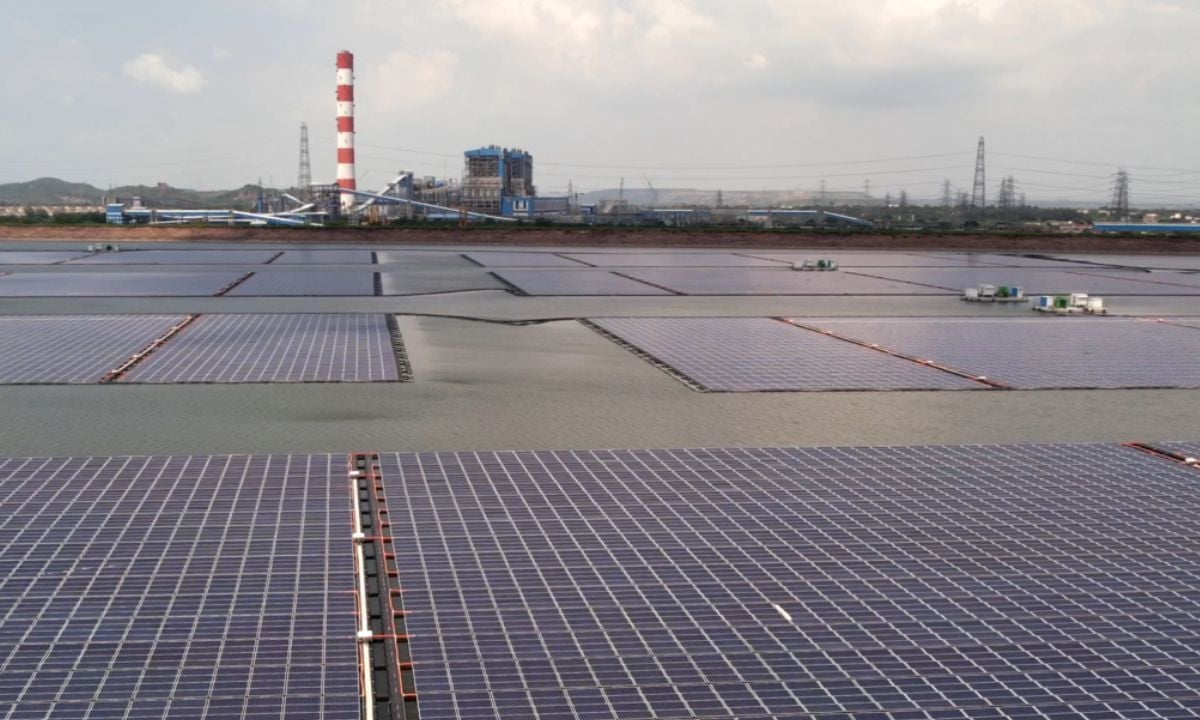
Floating Solar is a novel solution to increase RE production without consuming large land areas. Floating PV (FPV) is the term for PV systems installed on floating platforms over suitable water bodies. The floating solar power plant (NTPC concept) showcases the ability of utilizing existing reservoirs, making use of the surface waters and qualifying it for clean energy generation. These projects involve renewable energy generation, land management, design planning, electrification and environmental aspects can all be incorporated.
Floating Solar Technology
Floating solar power plant NTPC are PV panels installed on a specially-designed floating platform in the water. They are typically tied up to these platforms with anchoring and mooring systems to keep them stable in all conditions where water levels, wind and water flow change. Power generated is moved towards collection systems via electrical components, then power is moved towards the grid. The key element remains the same as in ground-mounted installations – harvesting solar energy – but floating installations have other engineering challenges regarding buoyancy, water conditions, structural integrity, and ease of maintenance.
Energy Generation
PV modules produce electricity using semiconductors that capture the sun's rays. Relatively open exposure to sun may be advantageous for floating arrangement where surrounding structures positionally may create less shading issues. In addition, water can impact the module operating environment around all solar modules, helping to promote module temperatures conducive to the operation of solar modules under appropriate conditions. However, the actual rate of generation is dependent on irradiation from the sun, the characteristics of the modules, the design of the system, the weather conditions, the efficiency of the equipment and the availability of the system. Assessment of the performance consequently needs to be done through engineering analysis of the site location.
Land Conservation
The first benefit that comes with the floating solar project is the reduced use of land. Floating systems utilize water surfaces, while conventional large-scale solar projects need a large amount of land. This may be beneficial in areas where land is limited, costly, sensitive, and/or needed elsewhere for other productive uses. A floating installation thus is another lever for increasing renewable energy capacity and can help mitigate some of the land use concerns of large onshore PV projects.
Engineering Requirements
Special Built-up, Electrical Planning is required for Floating Solar installations. Changing environmental conditions must be taken into consideration at certain points to withstand upright positions for the PV modules on the buoyant platforms. Anchoring systems must be capable of coping with water-level fluctuations and the anticipated displacement. Electrical cables need proper protection from moisture, mechanical stress and the environment. During the design of the plant, access pathways and maintenance arrangements will also need to be taken into account. These engineering needs make floating installations different from normal solar installations located on land, and necessitate specialised project planning.
Environmental Considerations
It is important to evaluate the environment prior to construction for water based solar. Water quality, aquatic ecosystems, biodiversity, management of the reservoir, navigation, fishing, and communities may be significant issues in project planning. The ratio of water surface to panel area may also impact the project and should be explored with the proper technical and environmental studies. Development is a balance of the goals of renewable energy versus the impact on the ecology and current uses of the water body.
Renewable Energy Potential
Floating PV (FPV) widens the development possibilities for renewable energy. Water storage tanks with adequate facilities can offer the potential for power generation with less developed land. Large-scale projects may also help to achieve broader goals of renewable-energy targets, and diversifying electricity sources. The case study of the floating solar power plant (ntpc approach) demonstrates the versatility of the solar energy source, and the ability to utilize solar technology in diverse physical settings by applying specialized engineering, careful planning, and integration with the existing energy infrastructure.
Conclusion
With the ntpc concept of floating solar power plant, it has become a crucial development in solar infrastructure that deals with large-scale generation. Floating solar projects can help to generate electricity and minimize land use by mounting the PV systems on appropriate water bodies. Implementing it is dependent on structural engineering, an environment assessment, integrating the electrical system, dependable maintenance, and careful management of the reservoir. With the expansion of renewable energy capacity, floating PV (f-PV) could also be a practical way to utilise the resources and fit into a more diversified power-generation system while furthering clean energy.